About Mars Rover Run
Mars Rover Run is a free, browser-based side-scrolling platformer set on a fantastical version of the Red Planet. You pilot a Mars rover across rocky Martian terrain, leaping over crater pits, stomping skittering rock crabs and whirling dust devils, and collecting glowing rock samples. Those samples recharge your rover, and that charge doubles as its health - take a hit and you lose charge; run it down to empty and you lose a life. Reach the beacon at the end of the level to bank your score, and try to beat your personal best.
The game runs entirely in your browser with nothing to download, works on both desktop and mobile, and is drawn frame-by-frame in code - no downloads, no sign-up, just play. It is built in the same spirit as our Apollo 13 mission game: a quick, fun way to explore space themes.
How to Play
Use the arrow keys or A and D to drive left and right, and the Up arrow, W, or the spacebar to jump - on a phone or tablet, use the on-screen buttons. Mars has about 38 percent of Earth’s surface gravity, so the rover’s jumps are high and floaty, giving the game its distinctive low-gravity feel. Time your jumps to land on top of enemies and crack them apart; touching them from the side drains your charge - and since your charge is your health, keep it topped up by grabbing rock samples. Watch the skies, too: when a dust storm warning flashes, sprint to a boulder and tuck into its shelter before the wind hits, or the blowing grit will damage your rover.
Real Mars Rovers
The game is pure fantasy - real Mars has no rock crabs - but it is inspired by the remarkable robots NASA has actually sent to the Red Planet. Sojourner, Spirit, Opportunity, Curiosity, and Perseverance have spent years crawling across the Martian surface, drilling rocks, analyzing soil, and hunting for signs that the planet was once habitable. They creep along only a few centimeters per second and really do collect rock and soil samples for study.
Perseverance: A Real Rover Exploring Mars Right Now
Our little rover is make-believe, but it is modeled on a very real one. NASA’s Perseverance rover landed in Jezero Crater on February 18, 2021, and is still exploring Mars today. About the size of a car and powered by a nuclear battery, it is studying an ancient dried-up river delta for chemical clues that microbial life may once have existed there, and it is sealing tubes of rock and soil for a future mission to bring home to Earth. Every image below was taken by Perseverance’s own cameras.
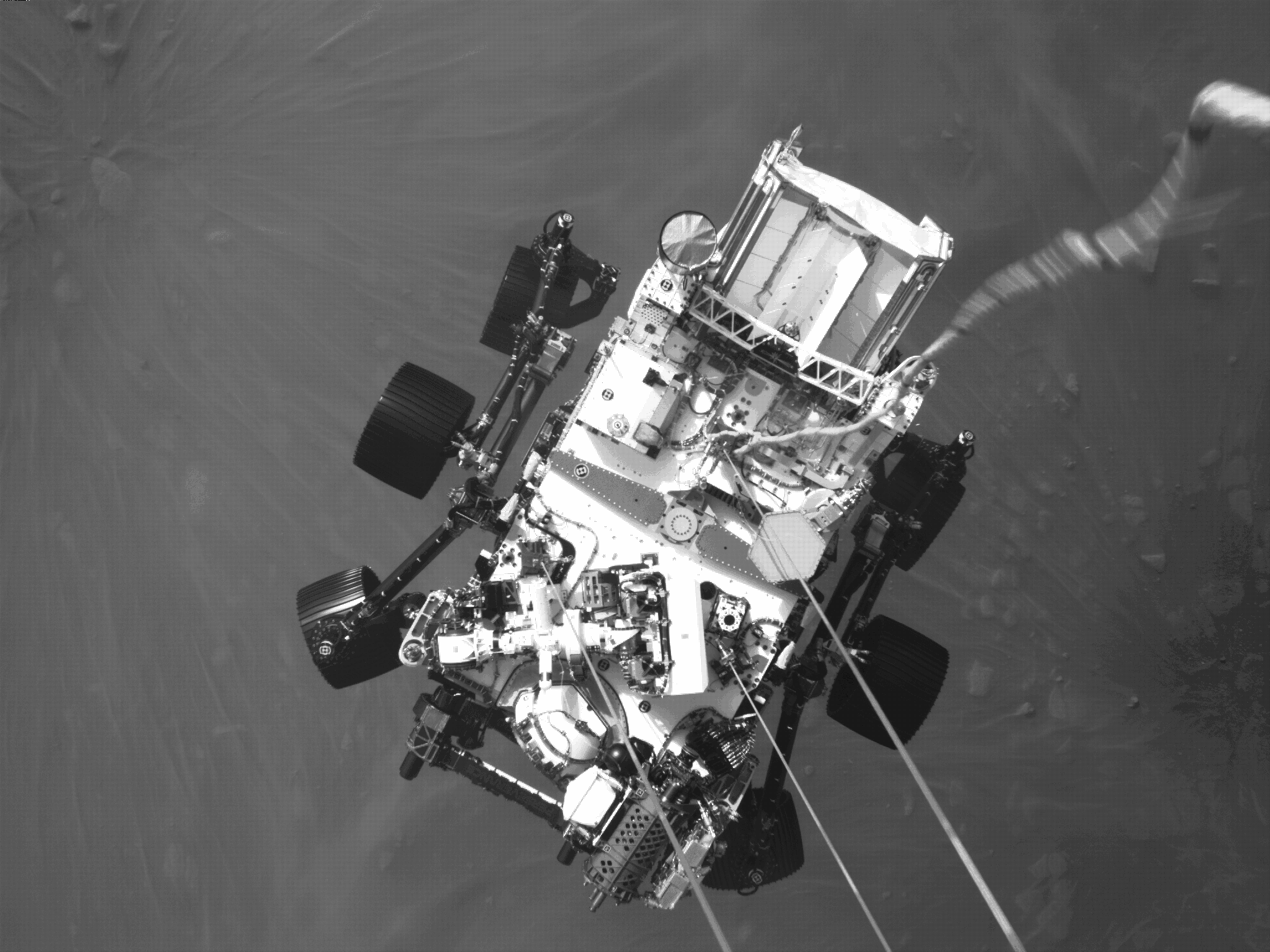
Landing is the hardest part of any Mars mission. Perseverance slammed into the atmosphere at around 12,000 miles per hour and had roughly seven minutes - the famous “seven minutes of terror” - to bring itself to a complete stop, entirely on its own, because radio signals take many minutes to travel between Mars and Earth. A heat shield, a supersonic parachute, and finally a hovering, rocket-powered sky crane lowered the rover on cables and set its wheels gently in the dirt, then flew off to crash at a safe distance.
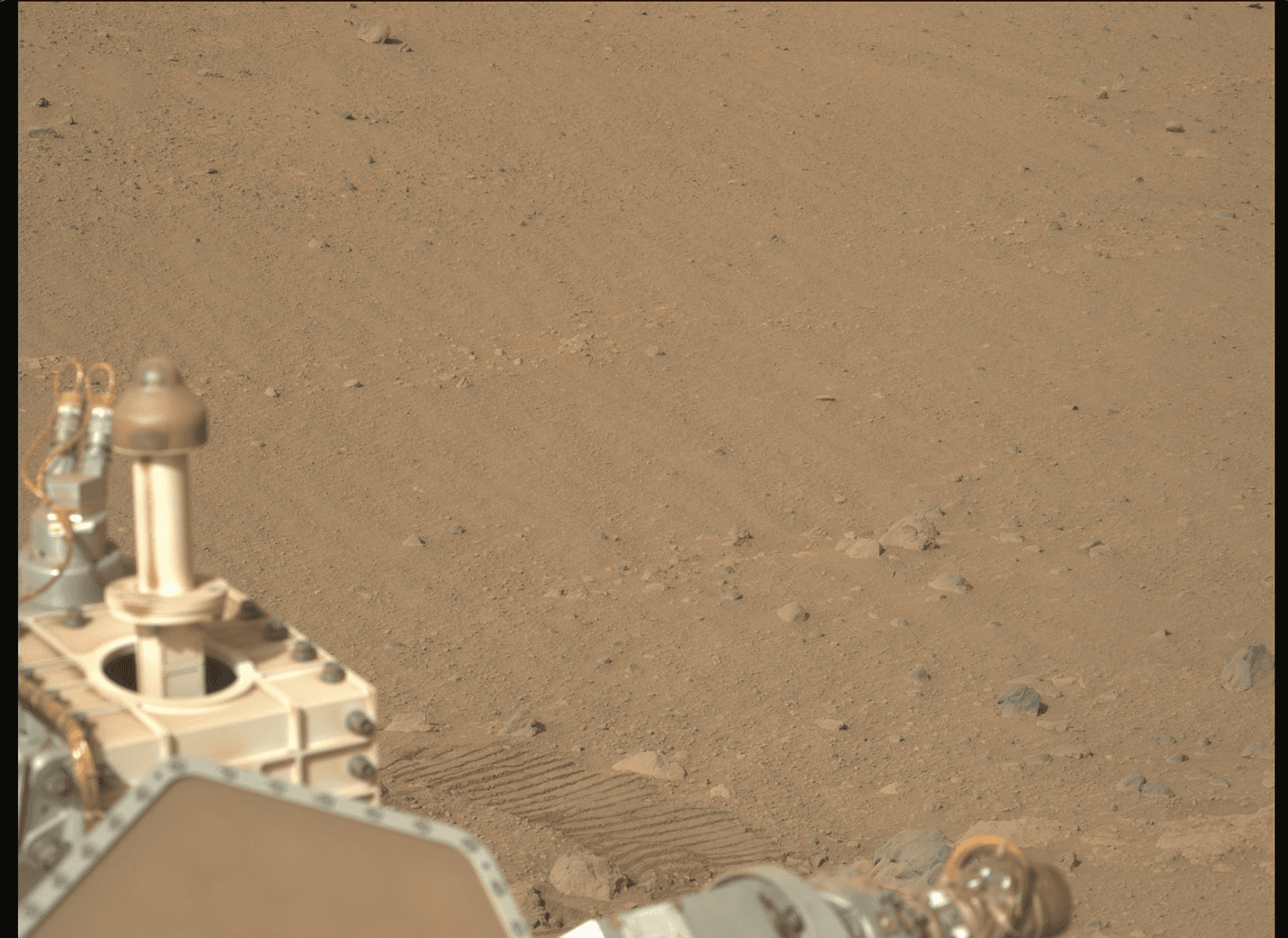
On the surface, the rover sees through a suite of cameras. Mastcam-Z, perched on the mast like a pair of zoomable eyes, captures the sweeping color landscapes of dunes, rocks, and distant crater rims. Other instruments fire a laser to read rock chemistry from a distance, scan beneath the ground with radar, and even record the sounds of Mars with microphones. Look closely and you can see the rover’s wheel track pressed into the soil - it really does leave tracks, just like the rover you drive in the game.
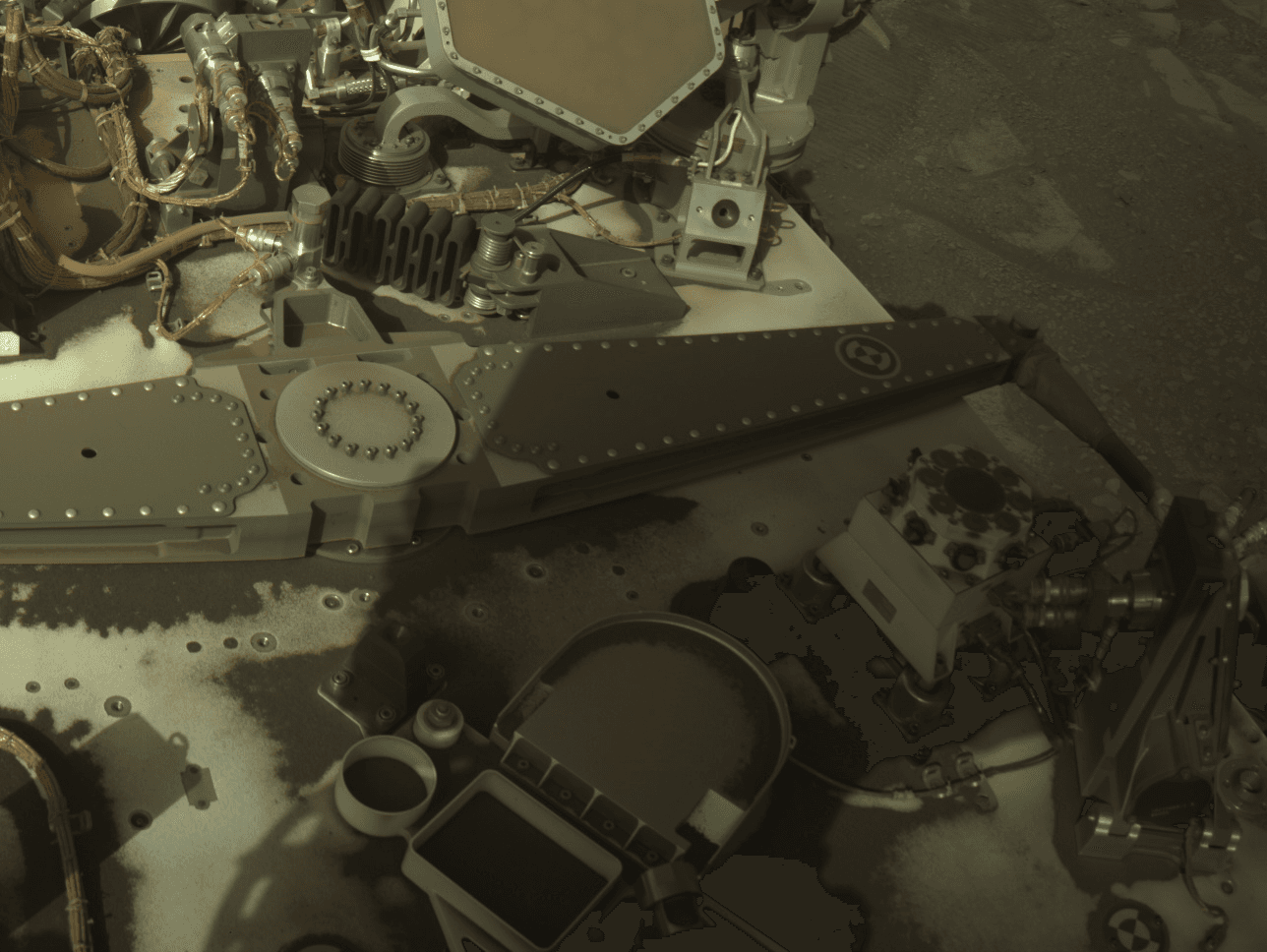
Real rovers drive nothing like a fast-paced platformer. Perseverance tops out around 0.1 miles per hour - slower than a tortoise - and relies on engineering cameras like the navigation cameras above to map the terrain, spot obstacles, and plan a safe route, sometimes steering itself autonomously while the team on Earth sleeps. There are no pits to leap or crabs to stomp, but the real hazards are just as serious: sharp rocks that can puncture a wheel, soft sand that can trap the rover, steep slopes, and the planet-wide dust storms that once ended the long-lived Opportunity rover’s mission in 2018.
Keep Exploring
Curious about the real night sky and the worlds beyond Mars? Explore the rest of Solar Ruler: track the live Moon phase, check solar weather, see what is visible on the Tonight’s Sky page, or play our Apollo 13 game.