There's a particular kind of quiet you only find when you get far enough away from the city. The hum of traffic fades, the orange glow on the horizon drops away, and the sky finally opens up. I drove out to a dark-sky area in mid-western Minnesota recently to do two things at once: scout a new viewing spot, and put a brand-new piece of gear through its paces.
The gear was a DJI Osmo Pocket 3 - a compact gimbal camera with a 1-inch sensor. The plan was simple. I had a clear-sky window in the area I was heading, which the cloud cover overlay on Solar Ruler confirmed nicely, and I figured: many nights ahead to explore, so why not bring a new toy along on the first one?
What follows is an honest field report. Some of it went the way I expected. Some of it surprised me. And the part I assumed would be a write-off turned out to be the most interesting result of the night.
The Setup
The Osmo Pocket 3 is, first and foremost, a daytime video tool. That's what it's built for, that's where it shines, and that's where it's going to live in my kit going forward - family videos, travel, daylight B-roll. I knew that going in.
But it has a 1-inch sensor, which is large for a camera this size. A larger sensor gathers more light, and I let myself wonder whether it might punch above its weight after dark. Action cams and phones have come a long way, and "computational night modes" keep getting better. So I brought a tripod to kill motion blur, set it to its nighttime mode, and pointed it up.
That tripod, by the way, was the right call. Steadying the camera made a clear, visible difference in the stills. Any time you're shooting in low light, your shutter has to stay open longer, and longer exposures mean any handshake turns pinpoint stars into smeared streaks. A stable base is the cheapest upgrade you can make to any night shot.
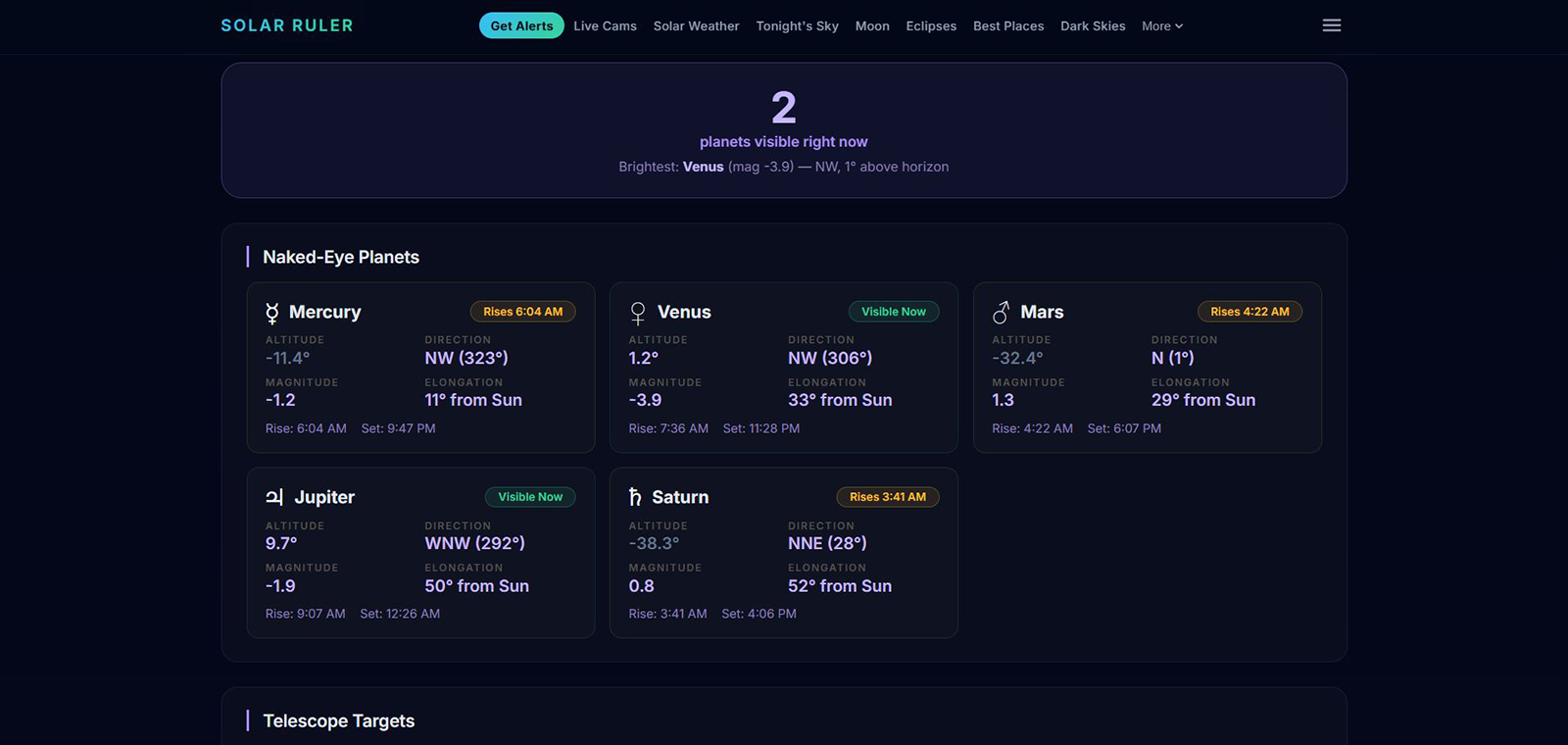
Before I left, I cross-checked what would actually be visible from where I was going. Tonight's Sky on Solar Ruler told me Jupiter would be well up in the west - useful information that came back to matter later.
What It Actually Captured
Here's where I'll be straight with you, because that's the whole point of a field test.
The video was a disappointment. Even in nighttime mode, the footage came out too dark to be worth sharing. That's not a knock on the camera - it's a knock on my expectations. Video means very short per-frame exposure times, and there simply isn't enough light hitting the sensor in those fractions of a second to render a night sky. The Osmo is doing exactly what it was designed to do; the night sky is just not the assignment.
The stills, though, were better than I expected. And this is the part worth slowing down on.
A Tree Line and a Star Pattern
The first frame caught a wide view: a row of bare trees along a lake, the faint glow of distant lights on the far shore, and a sky that still held a deep blue rather than true black. Up in the upper-right of the frame, Orion came through - that unmistakable pattern, bright enough to trace with your eye.
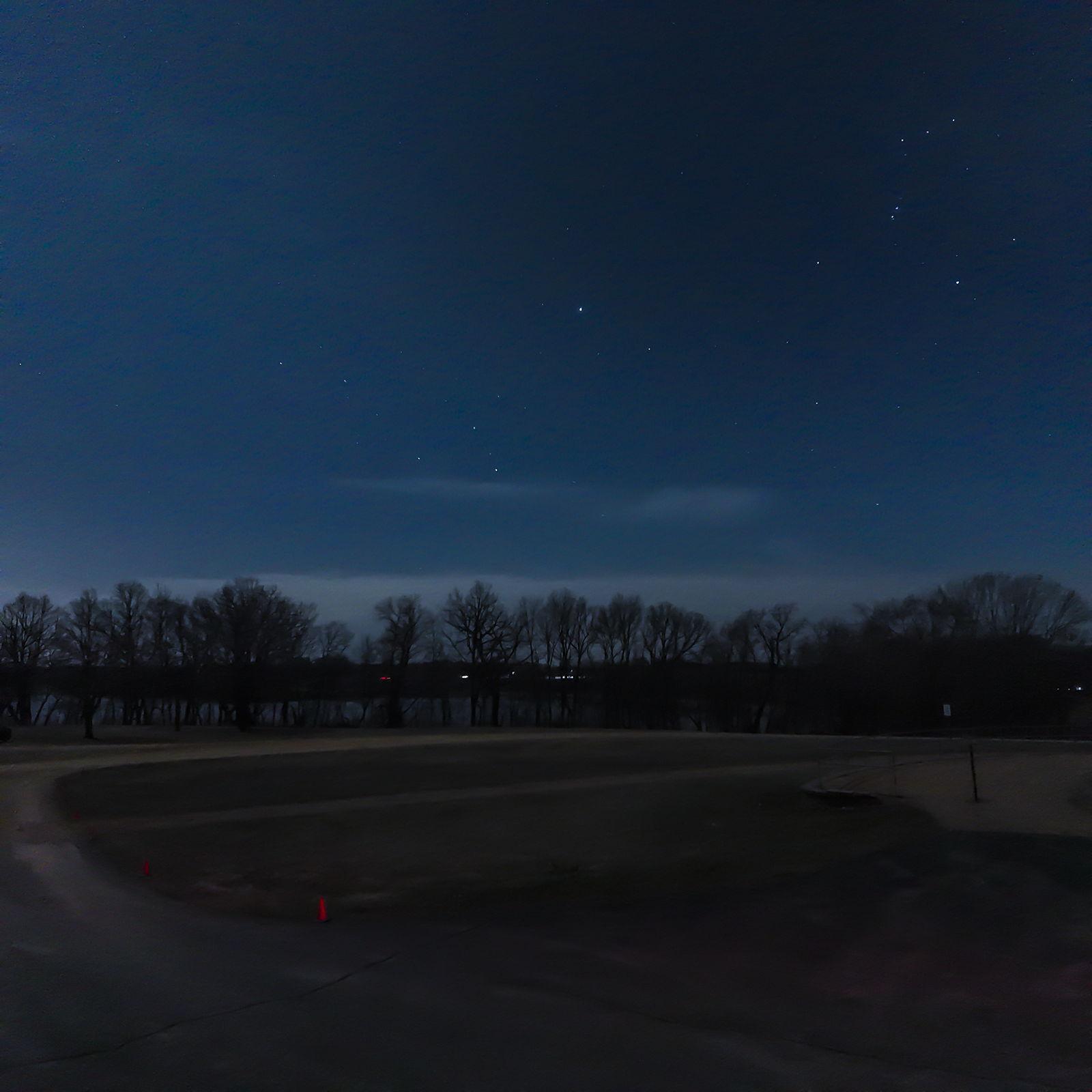
What strikes me about this image isn't that it's a perfect astrophoto - it isn't. It's that a pocket-sized action cam, on a tripod, pulled real stars out of the sky and held onto a usable foreground at the same time. That combination is genuinely hard, and the little Osmo did it.
The Moon Through the Clouds
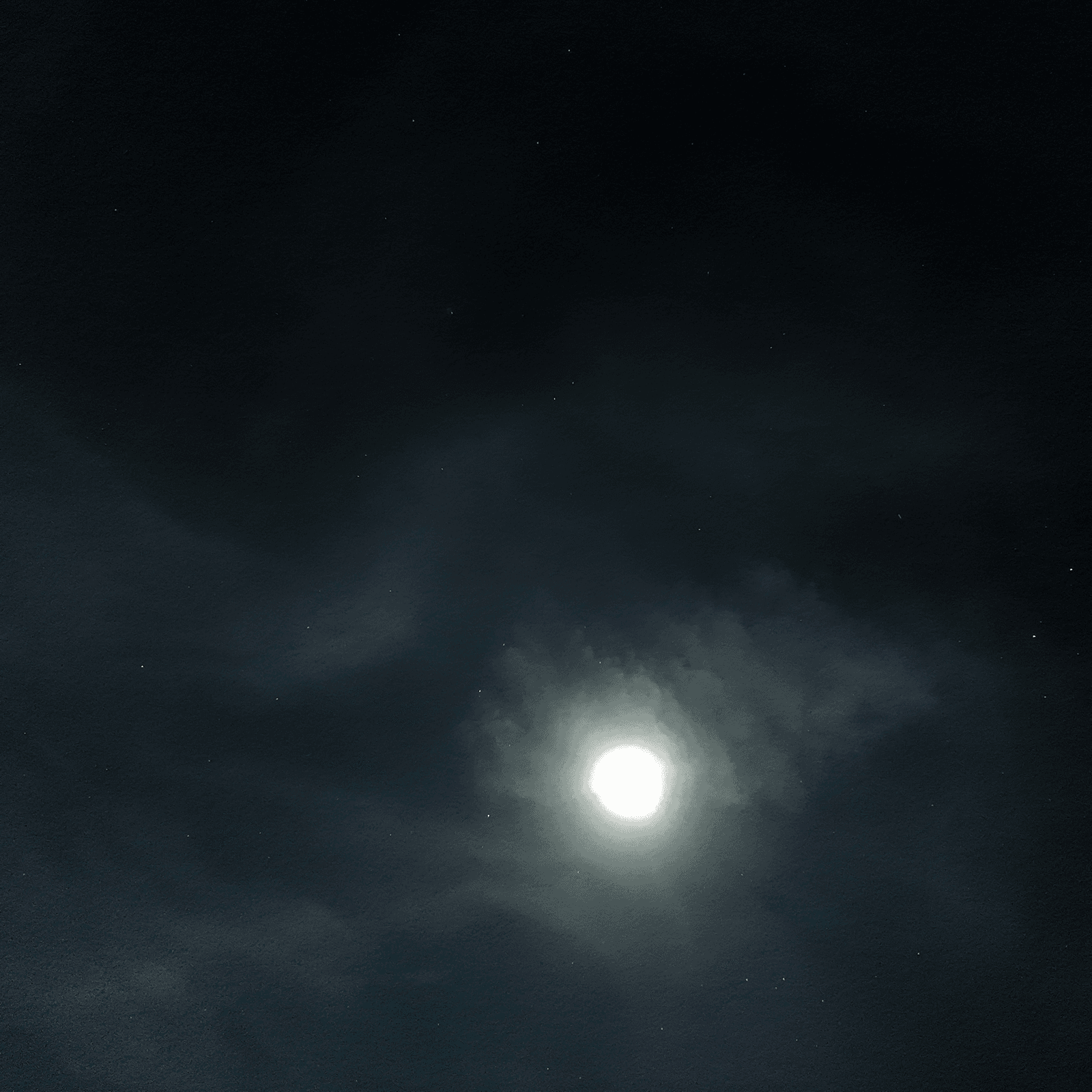
The sky that night was partly overcast - broken cloud drifting through. Normally that's a frustration. But it gave me the best single frame of the evening: the Moon breaking through a gap, its light catching the edges of the surrounding clouds and turning them silver.
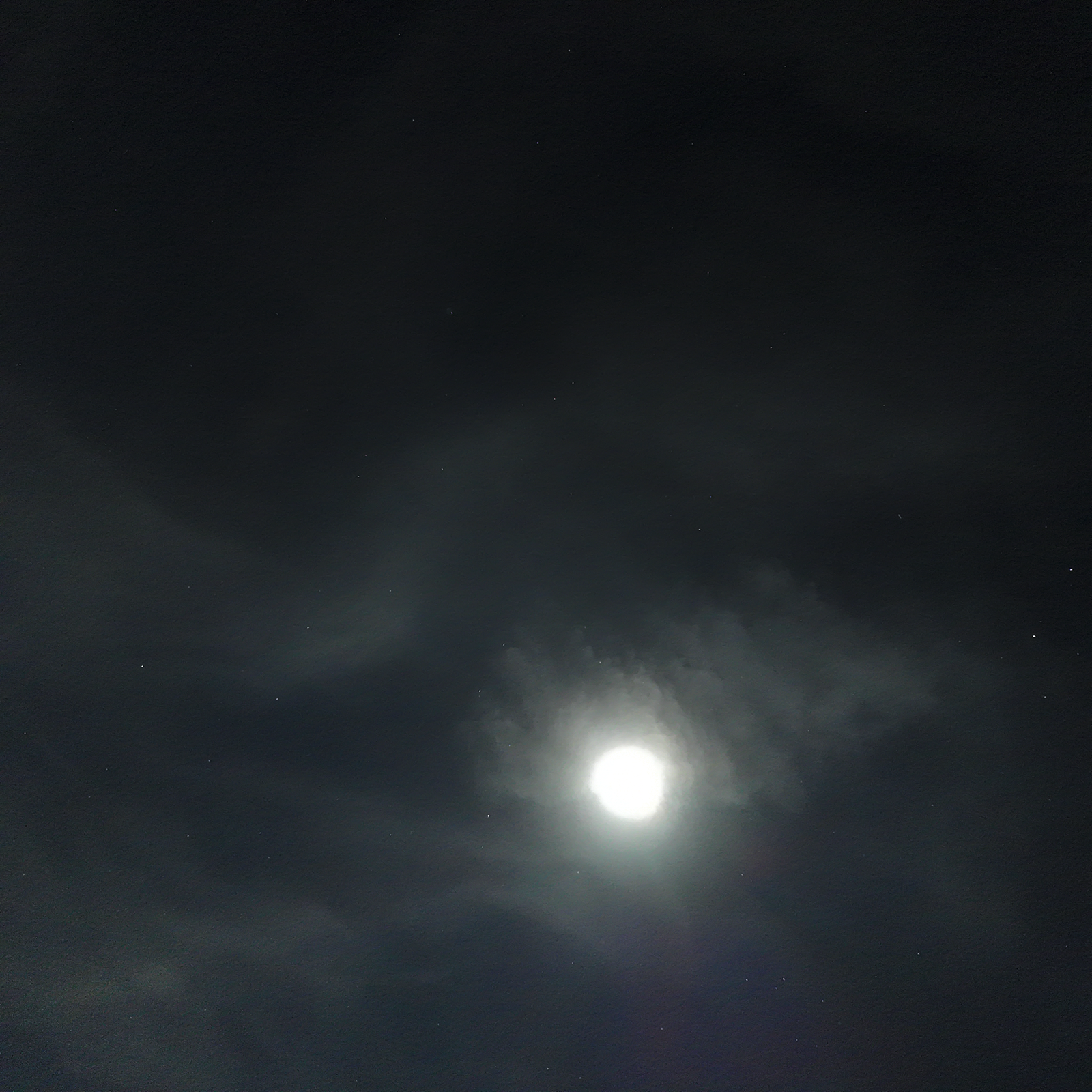
This is the shot I'd actually hang on a wall. It's atmospheric, it's moody, and it's the kind of image where the "imperfect" conditions made the photo rather than ruined it. The Osmo's bright-point handling blew out the Moon's surface detail - a tiny sensor will always struggle with that much dynamic range - but the overall scene is a keeper.
A Field of Stars
The third still was pointed straight up at open sky: dozens of stars scattered across a deep blue field, with one notably brighter point low in the frame - Jupiter, though at this scale it reads as just a bright dot rather than the banded giant you'd resolve through a telescope.
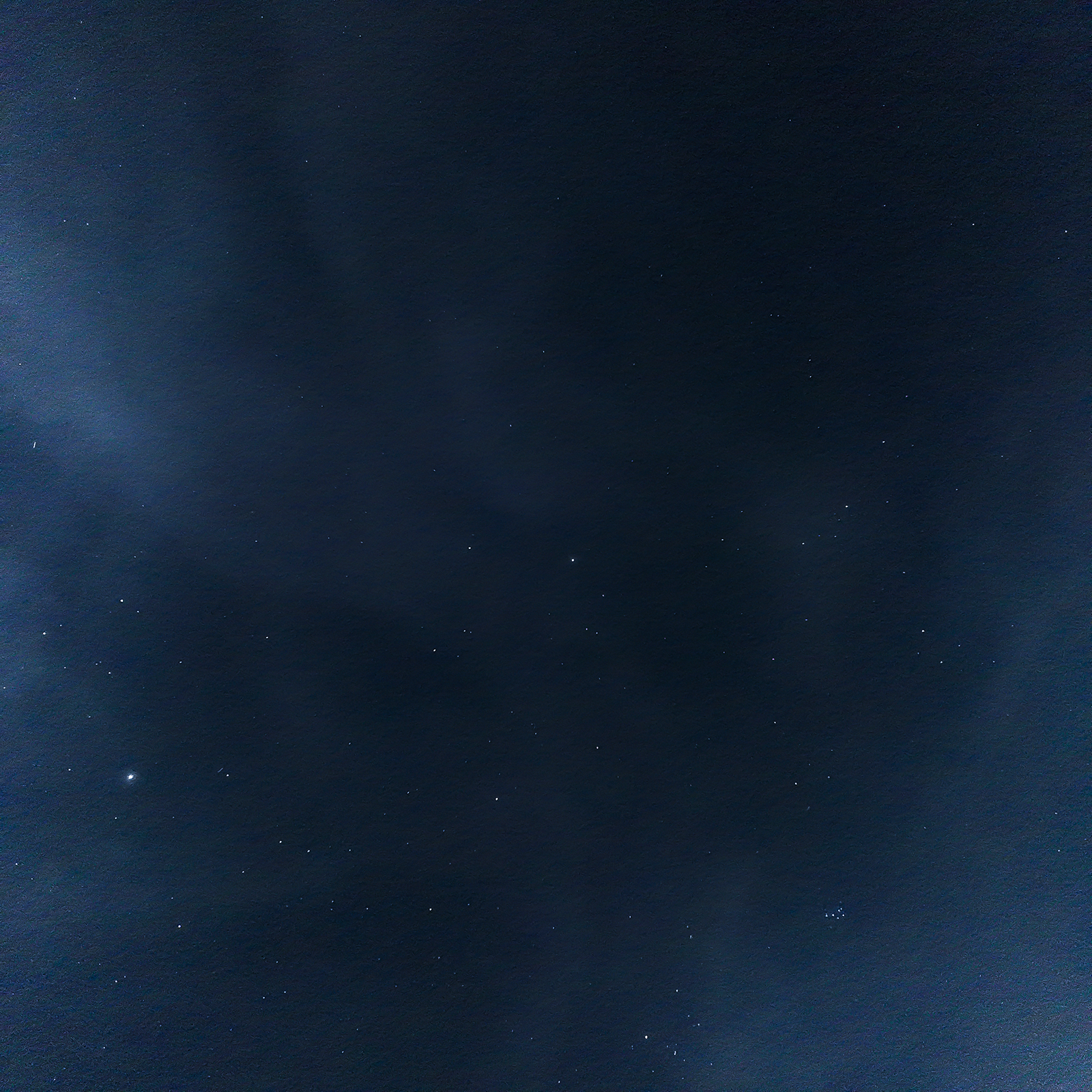
There's visible noise when you look closely, and the faint clouds show up as soft smudges, but for a camera of this class shooting straight up, it pulled far more out of the dark than I'd have bet on.
The Honest Verdict
So, did the Osmo Pocket 3 "fail" at night photography? No. It just has limits, and I learned exactly where they are:
- For video, it's the wrong tool after dark. Full stop. The exposure times are too short to gather starlight.
- For stills, it's surprisingly capable - as long as you respect what it is. On a tripod, in its night mode, it will give you recognizable star patterns, dramatic Moon-and-cloud shots, and wide-field scenes with a foreground. It will not give you the clean, deep, detailed astrophotos you'd get from a dedicated camera with manual long-exposure control and a fast lens. That's not its job.
The real lesson is one that applies to almost any gear: a tool isn't good or bad, it's matched or mismatched to the task. The Osmo is going to be fantastic for the daytime family video I bought it for. And now I also know it can grab a quick, shareable night-sky snapshot in a pinch - which is more than I expected when I started undervaluing it on the drive home.
If you want a deeper look at gear that is matched to the task, our aurora photography guide and phone aurora photography guide walk through what actually works under a dark sky.
Looking Up, Looking Back
Beyond the gear talk, this was simply a good night. There's something restorative about getting out of the city and into the country dark. Standing there under that sky, I kept thinking back to time I spent out in North Dakota - the kind of wide-open, unspoiled darkness that's getting harder to find. Nights like this are a reminder of why a place with a truly dark sky is worth driving for.
"When I consider Your heavens, the work of Your fingers, the moon and the stars, which You have ordained, what is man that You are mindful of him, and the son of man that You visit him?" - Psalm 8:3–4 (NKJV)
It's hard to stand under a sky like that and not feel the weight of those words.
What's Next
This was a first outing with the wrong tool for one specific job - and I'd still call it a win. I've got plenty of other equipment in the bag that's built for exactly this kind of night, and I'm looking forward to bringing the right gear out to the right spot and seeing what these Minnesota dark skies can really show.
If you're planning your own night out, check the cloud cover overlay on Solar Ruler before you drive. A clear window makes all the difference - and as I learned, so does bringing the right tool for the job.
More to come.